Remaining Self-Sufficient

remaining self sufficient-2

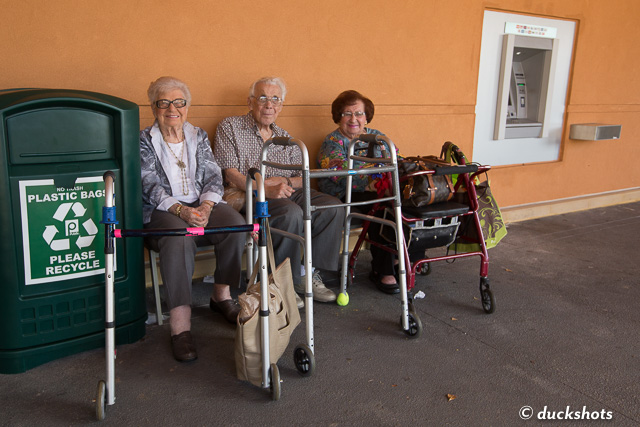
Senior Citizes are all over the place in Sunny Southern Florida, people staying alive, remaining active. Staying purposeful.

They get around. Know the bargains. Like to shop without dropping, especially in grocery stores. Instant kindness in the aisles and checkout. Someone carries the bag, maybe the person is older than they are, but less frail. Keeps them all busy and out of trouble.

Buses pick them up in the communities their kids have dumped them. They get spruced up, equip their walkers with fresh tennis balls and shopping bags. They don’t buy much; cannot eat what they used to. One stop shopping: drugs and food. Bus takes them home.

They love to smile and converse, especially with someone they haven’t seen before pays them a courtesy.

Preparing for Dinner

So, to get ready to celebrate Saturday night date night, I need some flowers, some vodka and wine and a hope to be a millionaire.

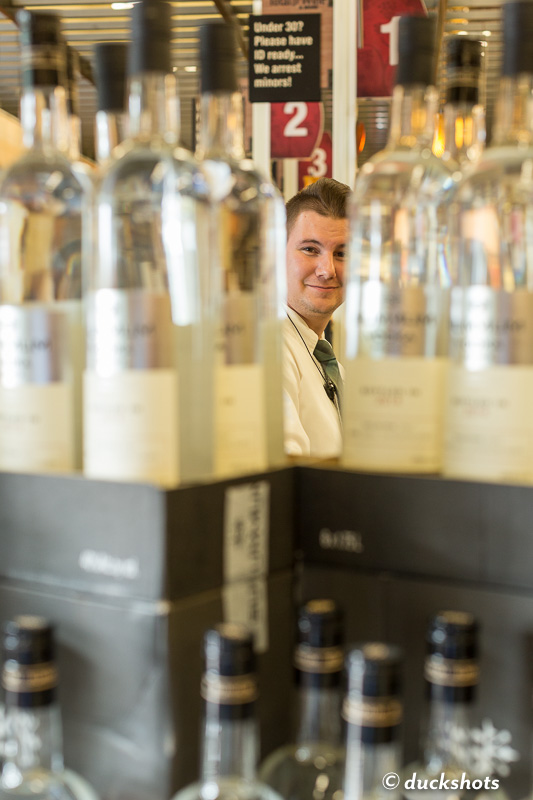
Chris, Total Wine-1

Chris manages Total Wines in Wellington, FL

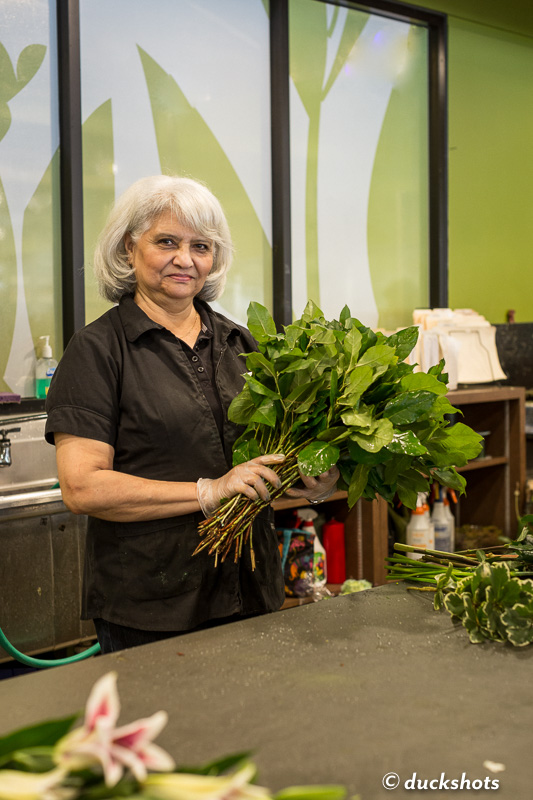
Maria Flower-3

Maria arranges flowers at Total Flowers in Boca Raton, FL

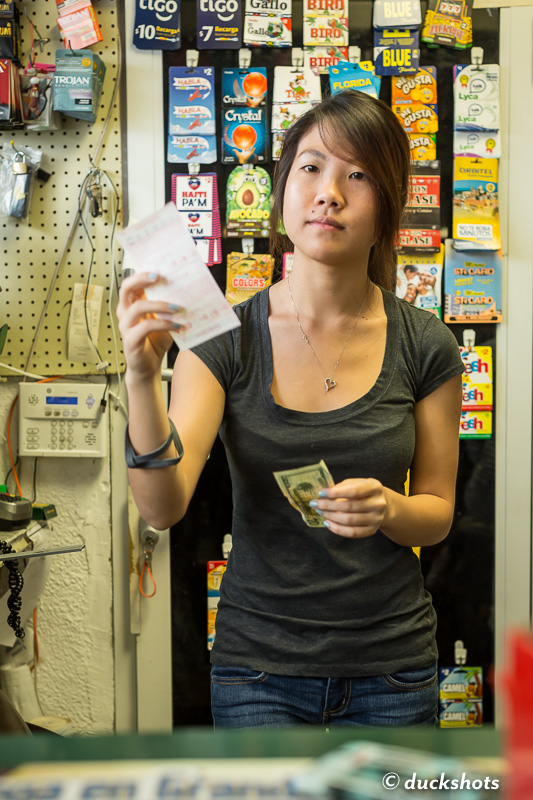
MARIA, sells dreams-1

Maria sells lotto tickets at some dive in Boynton Beach, FL, where you can buy almost anything.

Steven Watkins Redux

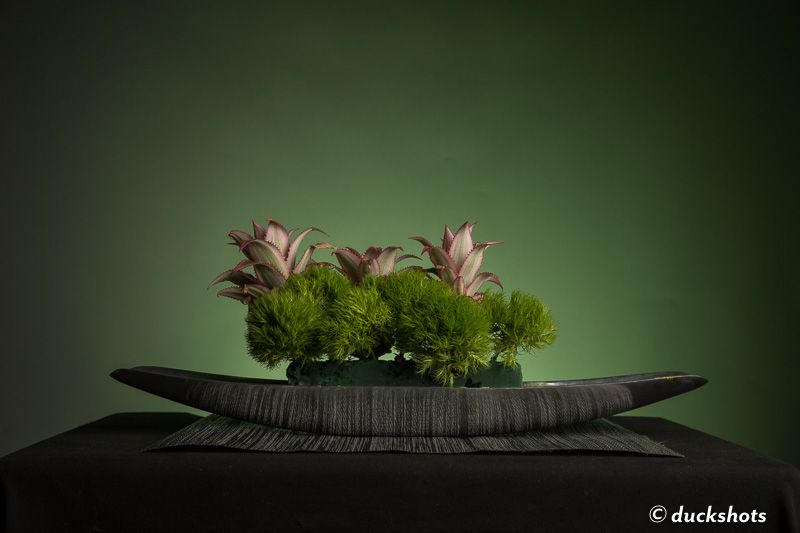
Steve Redux-1

My homage to Steven Watkins. So, Steven’s work lived a life. I couldn’t dismantle his work without using the useable. The plight of the flower artists, seeing the dead. I threw away what I could, rearranged and shot.

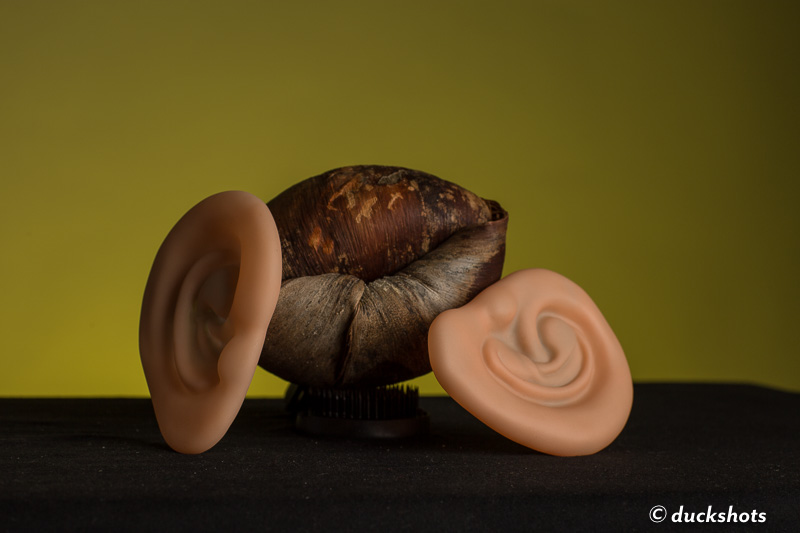
Did Gaugin Lop off Van Gogh’s Ear?

Gaugin Van Gogh's Ear-1

Sometimes the myths can be less interesting than the truths. I always thought that Van Gogh cut off his own ear. Research suggests otherwise. However it happened, it could not have been pretty.

He was a depressing character. Had syphillis or some other similar disease. No teeth. Didn’t take baths or worry about personal hygiene. And he drank a lot of absinthe. No wonder he painted still lifes and self-portraits.

Now on to how Van Gogh died. Did he shoot himself or did some kids shoot him?

Jordan Douglas, Revisited

Jordan Revisited-1

Every once in a while, I go back and look at shots I had taken earlier in my photographic career. Since I wasn’t charging people, many didn’t even return to look at the images, yet alone order any prints. I’d print one, put in my portfolio and that would be it. Never played with them, added any toning or conversion techniques or photoshopped them. That takes some cooperation from the sitter.

Jordan here, didn’t come back. He said he wasn’t looking for images dark or edgy. We haven’t spoken since then; not unusual for me and my sitters. People want their photos to be like they want them to be. And I want mine to be like mine. In a good portrait shoot, the great images are something of a compromise.

Great looking guy. We did well during the shoot, surprisingly well, in light of the fact he is a fine art photographer and teacher. That we share a love of photographic history made it fun, but I never looked at the session until today when I was doing some housecleaning in my catalogues.

Not bad, I’d say. Still have some work to do on it, if I have time. More importantly, it tells me that in those files and folders sitting on my computer may lie some shots I would appreciate.

Lorin Duckman Reads Faces

ld faces

So, by this time you must know that I am an artist with a camera who shoots portraits. The heavy book in my lap, edited by the wife of a lawyer whom I knew when I lived in another body, traces the history of the photographic portrait. Where I fit into this ever changing medium has not yet been determined, but I am working on it.

Fascinating that the beginnings of photography and impressionism coincided. As painting went outdoors, aided by the lead tube, the paint brush and the collapsible easel, photography stayed indoors, trapped by its chemistry. The painters escaped the studio, finding their own plein aire truths on the banks of the Seine. The photographers focused their eyes on people and things that didn’t move, establishing themselves as the heirs to the pre-raphaelites. To many, they were not artists, but merely operators of cameras and mixers of dangerous liquids spilled over plates.

The principles of portrait photography remain the same. You need a camera, a sitter and a photographer. The more the three relate to one another, the better the portrait. The equipment has gotten easier to use and more democratic, which might be able to be said about painting. One still needs to be an artist and adhere to age old principle to do good work.

Duckman Cousins

Duckman Cousins

So, Sharon Duckman does geneology. On line, another geneologist finds her. Usually Sharon searched for Natters or one of her other projects. This time, a Duckman found her. Susan Duckman. A Scotswoman.

The discussion continued. Who knew? Another Duckman. Elizabeth. She lives nearby in West Palm Beach. We met at the Norton yesterday.

More to say, but let me leave it at this: I love family and I wonder what happened? How did this family that struggled to come to America, to escape persecution and find opportunity to achieve, dissolve so quickly, leaving Judaism, dismissing cousins, and rejecting their genes?

Check out the Duckman eyes on Susan and the Duckman attitude on Elizabeth. I cannot tell you the warmth I got from these babes. Terrific.

Leila Alaoui, Photographer Wounded in Burkina Faso Siege, Dies at 33

Screen Shot 2016-01-21 at 8.09.56 AM

Any time a photojournalist dies, the world is a little less safe and its future a little less optimistic. One image can bring a message words can only hope to deliver. One need not know the artist to understand her voice.

Her obit in the NYT tells of a woman who saw truth and put her vision to work to educate and enlighten.

http://www.nytimes.com/2016/01/20/world/africa/leila-alaoui-photographer-ouagadougou-attacks-dies.html?action=click&contentCollection=obituaries&region=rank&module=package&version=highlights&contentPlacement=6&pgtype=sectionfront

How inspiring she must have been to those who saw her work or worked with her.

Temple Anshei Shalom – Lifelong Learning

TAS_LD_Sanctuary-5

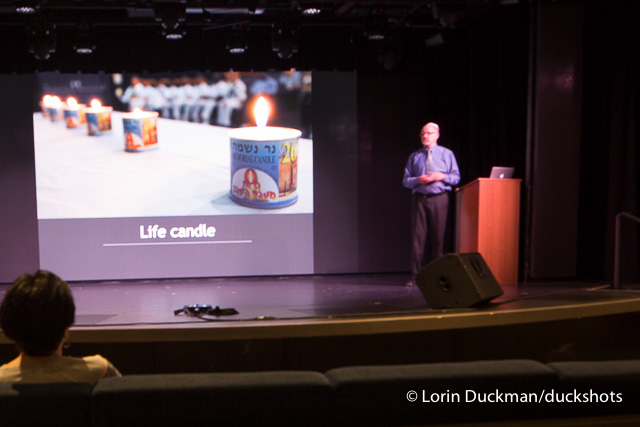
I delivered a lecture on Preserving Memories – Jews and Photography at Anshei Shalom’s Lifelong learning program. We talked about the origins of the craft, some of the practicioners of the art and capability of images to document, inform and entertain. Haven’t been in front of a group in years, especially when not wearing a suit or robes. I was shakey. About 50 attended and seemed engaged. Nice to talk about art instead of sociopaths.

What would photography be without Jews? Vanity Fair wouldn’t be the same without Annie Liebowitz. No Iwo Jima Memorial without Joe Rosenthal. No VJ day without Eisenstadt. Jews gave photography by Richard Avadon, Jay Maisel, Stieglitz, Diane Arbus, Bruce Gilden, Arthur Felig a/k/a Weegee, Joel Meyerwitz, Lisette Modal, Bruce Davidson, Arnold Newman, August Sander, Elliot Erwitt, Mary Ellen Mark and on and on and on. We wouldn’t see a lot of what we see or know what we know were it not for Jewish photographers.

Where did our camera sight come from? God gave us light and dark so we could see. God called it day and night. Photographers call it contrast. God created us in God’s image, telling us to create, make images we can see, which we can look at (not worship) giving people vision to make the world a better place. Jewish photography is genetic, hot-wired from God, a tool for the mission to do good deeds and leave the world better than what we found when we got here.